
MEDISEARCHER NEWS
Australia · Weight-loss medication & prescription access · 5 November 2026
In brief
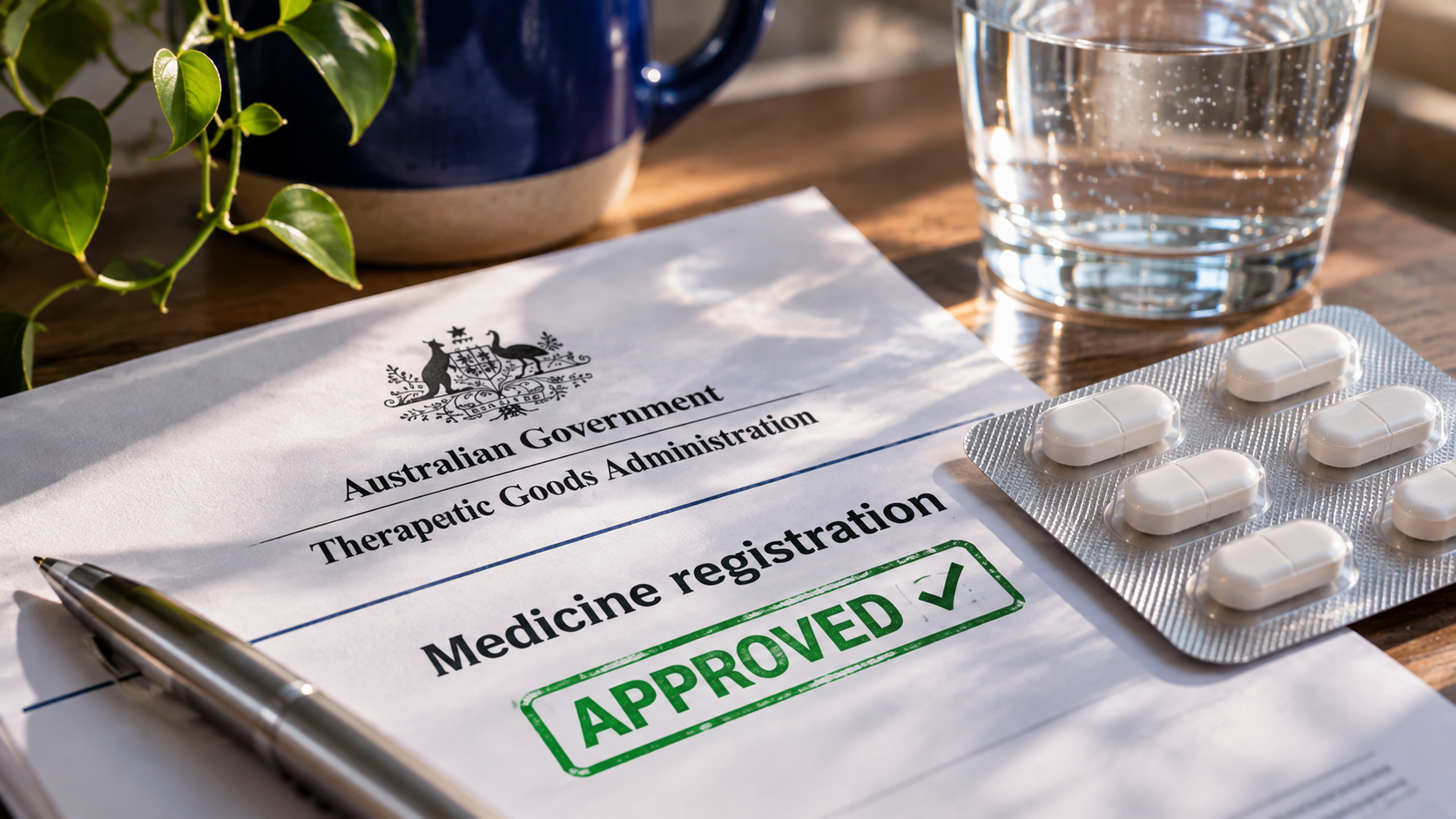
- Australia’s Therapeutic Goods Administration (TGA) registered Wegovy weight-loss tablets on 3 November 2026.
- This is Australia’s first oral GLP-1 medicine approved specifically for weight management.
- Four tablet strengths have been registered: 1.5 mg, 4 mg, 9 mg and 25 mg.
- Wegovy tablets contain semaglutide, the same active ingredient used in Wegovy injections and Ozempic.
- The tablets are taken once daily on an empty stomach, with specific instructions concerning water, food and other medicines.
- The manufacturer anticipates Australian availability before the end of 2026, but the medicine is not yet available in pharmacies.
- No confirmed Australian retail price has been announced.
- Wegovy is not currently subsidised through the Pharmaceutical Benefits Scheme (PBS) for weight management.
- Clinical trial evidence indicates that oral semaglutide can produce substantial weight loss, although results should not be interpreted as a direct comparison with every injectable GLP-1 treatment.
Australia has approved its first oral GLP-1 medicine specifically for weight management, opening the possibility of prescription weight-loss treatment without weekly injections.
The Therapeutic Goods Administration (TGA) registered four strengths of Wegovy tablets (semaglutide) on 3 November 2026, marking an important development in Australia’s rapidly expanding market for obesity medicines.
The tablets contain the same active ingredient as injectable Wegovy and Ozempic, but are designed to be swallowed once daily rather than administered by injection.
For Australians considering treatment, however, several important questions remain. The tablets are not yet available in pharmacies, their Australian price has not been confirmed, and regulatory approval does not automatically mean government-subsidised access.
What has Australia approved?
The TGA has registered four strengths of Wegovy oral semaglutide:
- 1.5 mg tablets;
- 4 mg tablets;
- 9 mg tablets;
- 25 mg tablets.
The approval covers chronic weight management in eligible adults with obesity or overweight and associated health conditions.
The approved indications also include reducing the risk of major adverse cardiovascular events in eligible adults with established cardiovascular disease and overweight or obesity.
The tablets are intended to be used alongside a reduced-calorie diet and increased physical activity.
The new registration does not mean that every adult wishing to lose weight qualifies for treatment. Prescribing depends on the approved indications, individual medical circumstances and assessment by a healthcare professional.
When will Wegovy tablets be available in Australia?
There is no confirmed Australian pharmacy launch date as of 5 November 2026.
Novo Nordisk has indicated that it is working towards making the oral treatment available to eligible Australians later in 2026.
However, TGA registration is not necessarily the final step before commercial supply.
Australian reporting following the approval indicates that remaining regulatory work includes final checks concerning packaging and manufacturing arrangements before the product can be released.
Patients should therefore distinguish between three separate milestones:
- TGA registration: the medicine has received regulatory authorisation for its approved uses.
- Commercial availability: the manufacturer has launched the medicine and pharmacies can obtain supplies.
- PBS reimbursement: the medicine is subsidised by the Australian Government for specified eligible patients.
The first milestone has occurred. The others remain separate questions.
How much will the Wegovy pill cost in Australia?
An official Australian retail price has not yet been announced.
The price may depend on the strength prescribed, commercial arrangements and whether any future government subsidy becomes available.
Existing injectable weight-loss treatments can involve substantial monthly out-of-pocket expenses, particularly when they are not covered by the Pharmaceutical Benefits Scheme.
However, it would be premature to assume that the tablet will necessarily be cheaper than the injection.
Although an oral formulation removes the need for injection devices, manufacturing costs, commercial pricing decisions and reimbursement arrangements can all affect the final patient price.
Australian patients will need to wait for confirmed pharmacy pricing before meaningful cost comparisons can be made.
Will Wegovy tablets be covered by the PBS?
Not automatically.
The Pharmaceutical Benefits Scheme (PBS) is Australia’s government programme for subsidising prescription medicines.
A medicine can be approved by the TGA without being listed on the PBS.
As of 5 November 2026, Wegovy is not subsidised through the PBS for weight management.
The Pharmaceutical Benefits Advisory Committee (PBAC) has previously considered reimbursement of injectable Wegovy, but a recommendation does not itself establish a funded listing or guarantee that the oral formulation will receive the same treatment.
For the new tablets, any future subsidy would require the relevant assessment and government arrangements.
Until a specific PBS listing is confirmed, patients should not assume that a prescription for Wegovy tablets will attract government reimbursement.
Who may be eligible for Wegovy tablets?
Wegovy tablets are prescription medicines intended for eligible adults requiring medical weight management or meeting the relevant cardiovascular-risk indication.
For chronic weight management, treatment generally concerns adults with:
- obesity, commonly defined as a body mass index (BMI) of 30 kg/m² or higher; or
- overweight, commonly defined as a BMI of at least 27 kg/m², together with a weight-related health condition.
Weight-related conditions can include hypertension, dyslipidaemia, cardiovascular disease and other obesity-associated health problems.
These criteria are not a substitute for the complete Australian prescribing information or an individual eligibility assessment.
Patients should discuss treatment suitability, contraindications, potential side effects and alternatives with their prescriber.
How do Wegovy tablets work?
Wegovy contains semaglutide, a glucagon-like peptide-1 (GLP-1) receptor agonist.
GLP-1 is a hormone involved in appetite regulation, blood-sugar control and digestion.
Semaglutide activates GLP-1 receptors and can:
- reduce hunger and food cravings;
- increase feelings of fullness;
- slow gastric emptying; and
- improve blood-sugar regulation.
These effects can help people consume fewer calories and achieve sustained weight loss while continuing treatment.
The medicine is not intended to replace appropriate nutrition, physical activity or long-term management of obesity-related health conditions.
How effective is oral Wegovy for weight loss?
The approval is supported by late-stage clinical research rather than preliminary laboratory findings.
One important study is OASIS 4, a Phase III clinical trial evaluating once-daily oral semaglutide 25 mg in adults with obesity or overweight and a weight-related condition.
Over 64 weeks, participants receiving oral semaglutide achieved substantial average reductions in body weight compared with placebo.
Published results indicate mean weight loss of approximately 13.6% with oral semaglutide versus 2.2% with placebo under the trial’s treatment-policy analysis.
Results were greater under an analysis estimating outcomes if participants adhered to treatment as planned.
These distinctions matter because different clinical trials and statistical analyses can produce different headline weight-loss figures.
The evidence establishes that oral semaglutide can produce clinically important weight loss, but does not mean every patient will experience the trial average.
Wegovy tablets versus injections: what is the difference?
Both formulations contain semaglutide and act through the same GLP-1 receptor pathway.
The most obvious difference is how they are administered.
| Feature | Wegovy tablets | Wegovy injection |
|---|---|---|
| Active ingredient | Semaglutide | Semaglutide |
| Administration | Oral tablet | Subcutaneous injection |
| Frequency | Once daily | Once weekly |
| Food restrictions | Specific fasting and water instructions | Can generally be injected with or without meals |
| Needles required | No | Yes |
| Australian status | Registered; launch pending | Already available by prescription |
The tablet may appeal to patients who dislike needles or have difficulty administering injections.
However, a daily tablet also requires a more demanding routine because food, drink and other oral medicines can interfere with semaglutide absorption.
Neither formulation is automatically the better option for every patient.
Why does the tablet contain 25 mg when the injection contains much less?
The different dose strengths can appear confusing.
Wegovy injections are commonly associated with a 2.4 mg weekly maintenance dose, while the newly registered oral formulation includes a 25 mg daily maintenance strength.
These numbers cannot be compared directly.
When semaglutide is swallowed, only a small proportion reaches the bloodstream because the digestive system limits absorption.
The oral formulation therefore requires a much larger nominal dose than the injected formulation.
A 25 mg tablet is not equivalent to injecting 25 mg of semaglutide.
Patients should never attempt to convert between oral and injectable doses themselves.
How should Wegovy tablets be taken?
Oral semaglutide has specific administration requirements because absorption is sensitive to food, water volume and timing.
According to established prescribing instructions for the oral Wegovy formulation, the tablet should be taken:
- once daily on an empty stomach;
- with a small amount of plain water;
- without crushing, chewing or splitting the tablet; and
- with a wait of at least 30 minutes before eating, drinking or taking other oral medicines.
Patients should follow the final Australian product information and their prescriber’s instructions when the medicine becomes available.
Taking the tablet incorrectly may reduce the amount of semaglutide absorbed and affect treatment effectiveness.
Can you switch from Wegovy injections to tablets?
Switching between formulations may be possible for some patients, but should only be considered with a healthcare professional.
The tablet and injection have different dose strengths, administration schedules and absorption characteristics.
Patients should not assume that their current injection dose can be converted into a tablet dose using simple arithmetic.
Switching arrangements should follow the applicable product information and take account of treatment response, tolerability and individual medical circumstances.
Are Wegovy tablets the same as Ozempic or Rybelsus?
Wegovy, Ozempic and Rybelsus all contain semaglutide, but they are not interchangeable products.
They can differ in:
- approved indications;
- formulation and dose;
- administration instructions; and
- reimbursement arrangements.
Ozempic is primarily associated with treatment of type 2 diabetes, while Wegovy is specifically developed and authorised for weight management and certain cardiovascular-risk indications.
Rybelsus is another oral semaglutide product used for type 2 diabetes.
The newly approved Wegovy tablets represent a distinct weight-management formulation and should not be confused with other oral semaglutide products.
For a more detailed explanation of the differences between the two major semaglutide brands, see MediSearcher’s Ozempic vs Wegovy comparison.
What are the side effects of oral Wegovy?
Oral semaglutide has a safety profile broadly consistent with GLP-1 receptor agonist treatment.
Common adverse effects include:
- nausea;
- vomiting;
- diarrhoea;
- constipation;
- abdominal discomfort; and
- indigestion.
Gastrointestinal side effects are particularly common when treatment begins or doses are increased.
More serious potential risks include pancreatitis, gallbladder complications, dehydration and associated kidney problems.
Patients should also be assessed for relevant contraindications and precautions before starting treatment.
The tablet formulation avoids injection-site reactions, but it does not eliminate the systemic risks associated with semaglutide.
Can Wegovy tablets be purchased online in Australia?
Once commercially available, Wegovy tablets will be prescription medicines rather than over-the-counter weight-loss products.
Patients should obtain them through appropriately regulated Australian pharmacy channels using a valid prescription.
Websites advertising Australian Wegovy tablets before legitimate commercial supply begins should be treated cautiously.
Consumers should be particularly wary of sellers claiming to offer prescription semaglutide without medical assessment, unusually cheap products, or medicines imported through unclear supply chains.
For practical guidance on checking pharmacy legitimacy, see MediSearcher’s guide to verifying a legitimate online pharmacy.
What happens next?
The next important development will be confirmation of the Australian commercial launch.
Patients and prescribers will also be watching for:
- confirmation of the first pharmacy supply date;
- official Australian retail pricing;
- final product and prescribing information;
- any PBS reimbursement developments; and
- real-world evidence on treatment adherence, tolerability and outcomes.
Competition from other oral weight-loss medicines may also become increasingly relevant as additional treatments move through regulatory review.
Why Australia’s Wegovy pill approval matters
The introduction of an oral weight-loss formulation represents a meaningful expansion of treatment choice.
Weekly injections have been an important feature of modern GLP-1 obesity treatment, but not every patient is comfortable using injectable medication.
A daily tablet could make treatment more acceptable to some people who have previously avoided injections.
However, the practical impact will depend heavily on affordability, supply and whether patients can consistently follow the tablet’s administration requirements.
For now, Australia’s TGA approval is an important regulatory milestone — but the more immediate questions for patients concern when the tablets will reach pharmacies, how much they will cost and whether government subsidy will eventually become available.
Reviewed by: Dr Mattias Hagman, PhD
Editorial review: This article was prepared for review of the Australian TGA registration of oral Wegovy, the distinction between regulatory approval and pharmacy availability, Phase III oral semaglutide evidence, administration and safety considerations, and the difference between TGA approval and PBS reimbursement.
Last reviewed: 5 November 2026
Sources and verification
MediSearcher consulted the following regulatory, clinical and authoritative sources when preparing this article:
- Therapeutic Goods Administration: WEGOVY semaglutide 25 mg tablet — Australian Register of Therapeutic Goods, registered 3 November 2026
- Royal Australian College of General Practitioners: TGA approves Wegovy weight-loss pill, 4 November 2026
- ABC News: Daily weight-loss tablet Wegovy cleared by TGA for use in Australia
- ClinicalTrials.gov: OASIS 4 clinical trial programme evaluating oral semaglutide 25 mg for weight management
- Australian Pharmaceutical Benefits Scheme: Official PBS medicine listings and reimbursement information
- The Conversation / ABC News: How the Wegovy pill compares with weight-loss injections, 5 November 2026
This article is for general informational purposes only and is not medical advice. Wegovy is a prescription medicine and is not appropriate for everyone. Patients should not start, stop, switch or change doses of semaglutide without advice from an appropriately qualified healthcare professional. Australian availability, pricing and PBS arrangements may change after publication.