
Equipment comparisons · US
Affiliate disclosure: MediSearcher has affiliate relationships with some suppliers and may earn a commission from qualifying purchases through approved links. Product selection is based on suitability and evidence, not commission.
Choosing a Mounjaro travel case starts with identifying the pen. The US single-dose presentation discussed here and the UK multidose KwikPen create different packing problems. A cooler’s generic “Mounjaro compatible” label does not establish how many of your pens will fit, especially with required packaging.
Start with the storage requirement
For the US single-dose pen, Lilly’s guidance specifies refrigeration at 36–46°F (2–8°C), protection from light in the original carton and up to a total of 21 days below 86°F (30°C) outside refrigeration. Select a case around your medicine’s current instructions and packaged fit. Do not apply UK KwikPen rules to this presentation.
The shortlist
Compare by what you need
| Product | Use case | Essential specification | Trade-off | Offers |
|---|---|---|---|---|
4AllFamily Nomad BigPassive refrigeration | More usable space in a power-free setup | 35.6–46.4°F (2–8°C)Up to 33h at 86°F (30°C) ambient | Larger format than Medium |  Compare details ↓ |
4AllFamily ExplorerRefrigeration with Biogel | A pack-based setup with optional USB assistance | Mode dependentUSB alone provides heat protection | Refrigeration requires the Biogel pack | Compare details ↓ |
4AllFamily VoyagerPowered refrigeration | Repeated refrigerated travel with reliable power | 35.6–46.4°F (2–8°C)Continuous power; ambient ≤95°F (35°C) | Plan for every power interruption | Compare details ↓ |
Products & merchants
The details that change the decision
Compare cooling method, preparation and usable space.
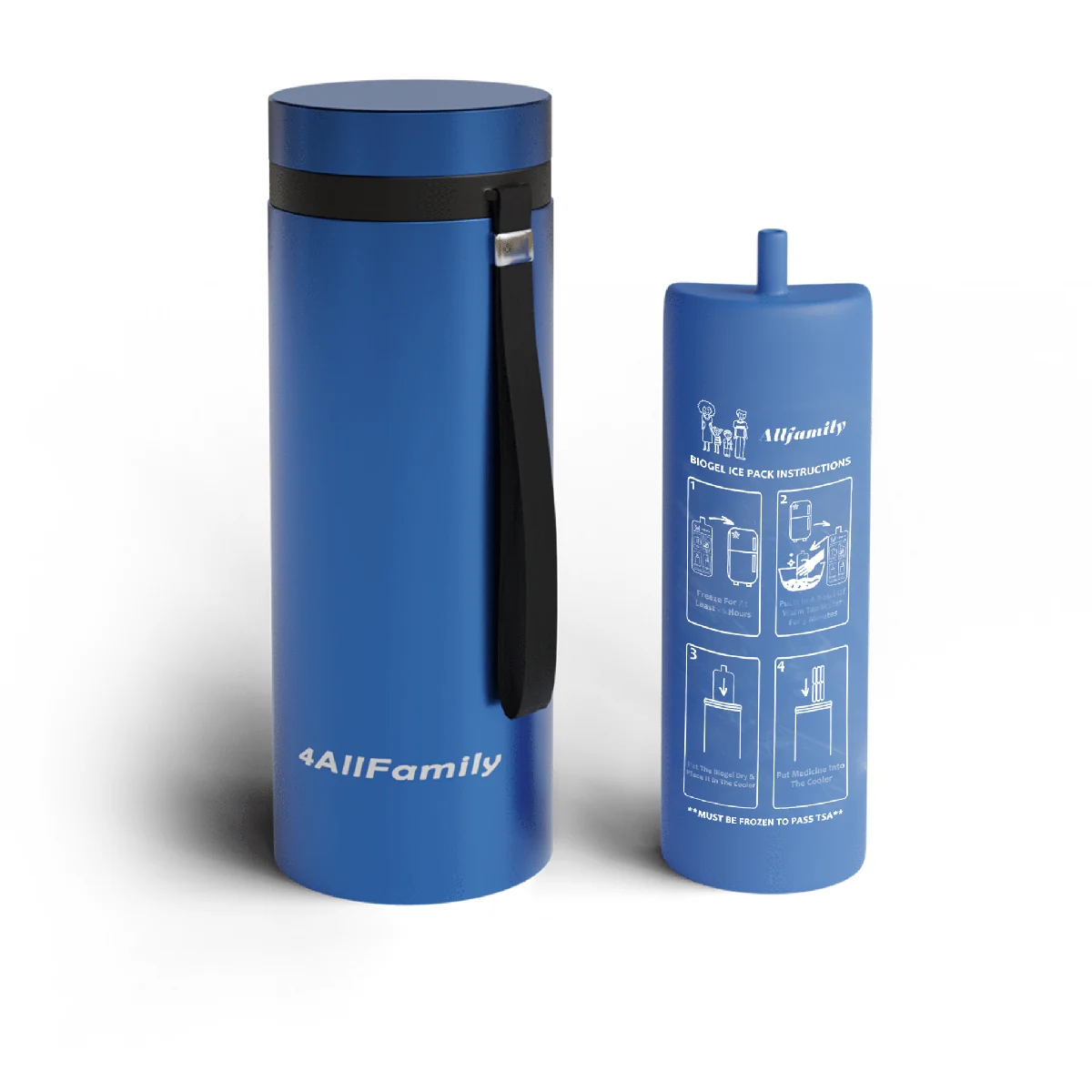
4AllFamily Nomad Big
More usable space in a power-free setup
- Cooling
- 35.6–46.4°F (2–8°C)
- Power / preparation
- Biogel pack
- Key condition
- Up to 33h at 86°F (30°C) ambient
Larger format than Medium
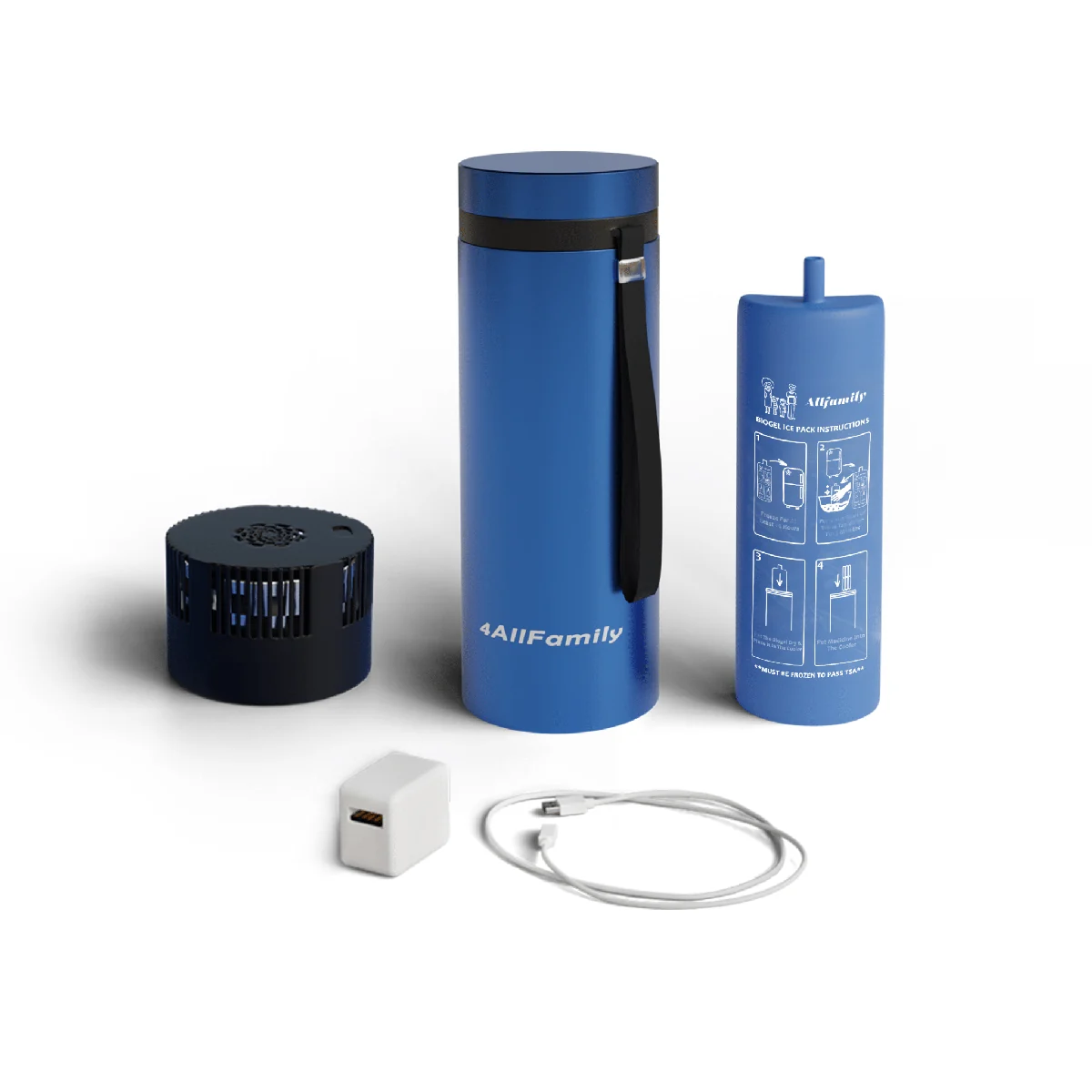
4AllFamily Explorer
A pack-based setup with optional USB assistance
- Cooling
- Mode dependent
- Power / preparation
- Biogel + optional USB
- Key condition
- USB alone provides heat protection
Refrigeration requires the Biogel pack
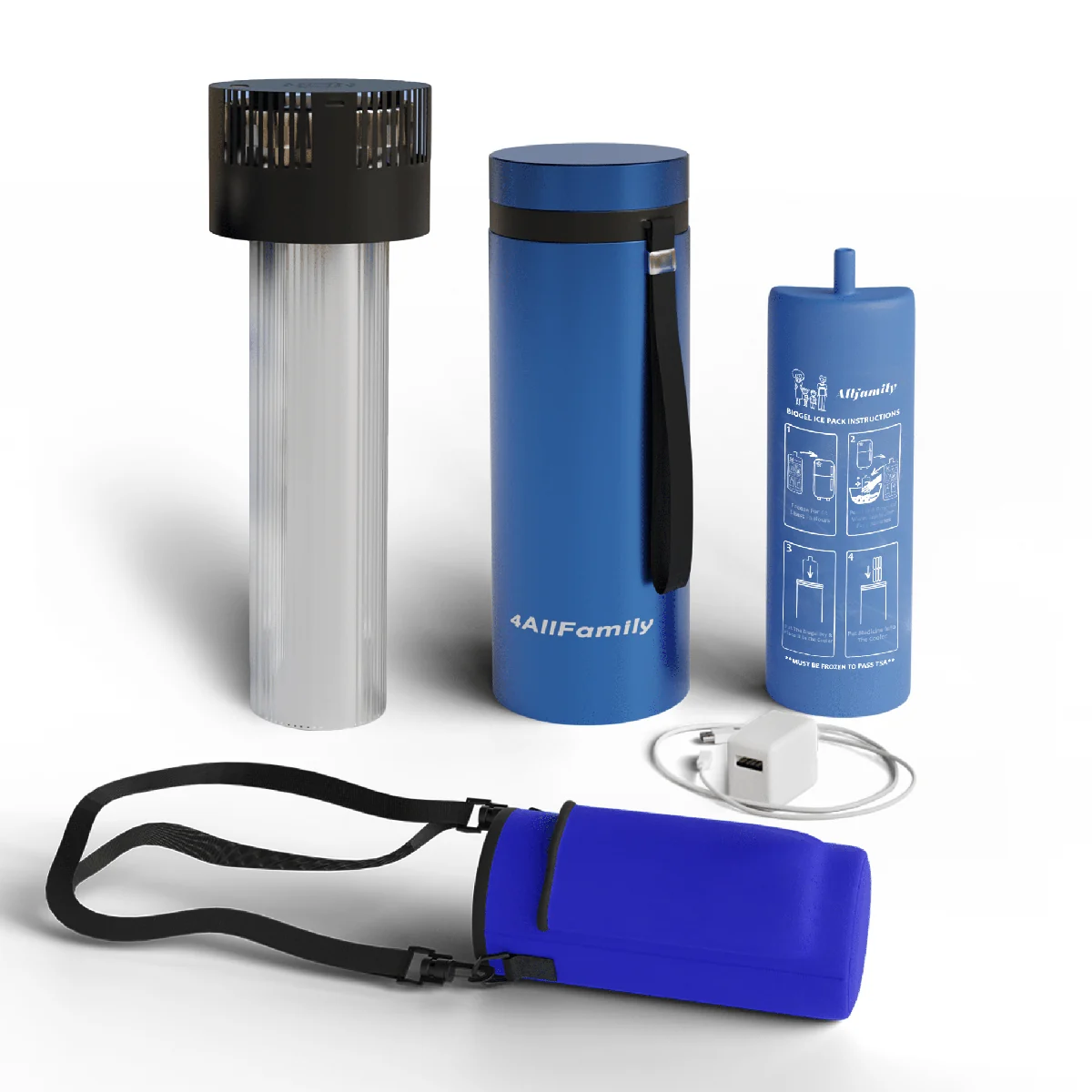
4AllFamily Voyager
Repeated refrigerated travel with reliable power
- Cooling
- 35.6–46.4°F (2–8°C)
- Power / preparation
- External USB; no built-in battery
- Key condition
- Continuous power; ambient ≤95°F (35°C)
Plan for every power interruption
Identify your presentation before comparing products
Read the carton and leaflet rather than identifying the medicine by brand alone. This guide addresses the US single-dose injection pen documented in Lilly’s US instructions. A pack of separate single-dose pens takes up space differently from a multidose pen used across several injections. Vials and other presentations need their own checks.
UK KwikPen guidance differs, including its after-first-use storage period. The UK patient leaflet is relevant to that presentation, not a replacement for US instructions. If buying a cooler from another country, do not assume the compatibility photograph shows the device you receive from your pharmacy.
Use the trip calendar to decide the packing problem
Make a list of the prescribed doses you need while away and the pens you plan to carry. Confirm that supply plan with your care team when necessary. This article does not advise changing injection dates or doses. Write down when any relevant unrefrigerated period began and do not assume another spell in a refrigerator creates a fresh allowance.
A trip can fit inside a stated time allowance while still creating a heat problem. Conversely, buying a refrigerator is not an automatic requirement for every short journey. Discuss the complete itinerary and expected conditions with the pharmacist when choosing between heat protection and refrigerated transport.
What to ask the case seller
| Question | Why it matters |
|---|---|
| Does this exact variant fit my US single-dose pen? | A KwikPen count cannot answer a single-dose fit question |
| Will the original packaging arrangement fit? | The light-protection instruction belongs in the packing design |
| How much usable space remains with the cooling pack? | Empty-chamber dimensions can overstate carrying capacity |
| What conditions apply to the cooling mode I will use? | A long hour claim may refer to a different temperature range |
| Can you confirm the arrangement in writing? | It gives you a specific answer to compare with the instructions |
Candidate case designs
Nomad Big, Explorer and Voyager remain candidates from our broader shortlist. Their different designs let you compare passive transport, pack-assisted cooling and powered refrigeration. Check the exact presentation and original-carton arrangement before relying on a capacity claim. The seller’s generic chart is useful to start a question, not finish it.
If compactness is the main aim, calculate the full kit first. A small cylinder that holds an unpackaged device may not solve the real requirement. A larger organiser and a separate appropriate cooling compartment may be more practical, provided the complete arrangement satisfies the medicine instructions. See portable refrigeration for the power trade-offs.
Keep the used-pen plan separate
A travel case for unused medicine should not become a container for used injection equipment. Plan a suitable sharps route before leaving and confirm how you will handle waste at the destination. The home sharps-container guide explains the difference between buying a container and arranging its eventual disposal.
Keep prescription identification, leaflet and relevant dates accessible. When returning, review the medicine’s actual history rather than assuming every pen brought home has the same storage status as when it left. If exposure or damage is uncertain, ask the pharmacist or Lilly for advice for the product concerned.
Work through a complete example
Suppose you have several prescribed injections to take while away and an overnight transfer before reaching your accommodation. The first decision is the medicine-storage plan across that whole period. The second is whether the pens and required packaging fit with the cooling insert. The third is how you maintain that arrangement during the stay and return. Comparing only the advertised flight duration would leave two of those questions unanswered.
Use the long-flight planning guide for transfers and the travel essentials checklist to organise the rest of the kit. The main case comparison explains the temperature categories without suggesting every journey needs the same equipment.
Frequently asked questions
Is Mounjaro KwikPen advice interchangeable with US single-dose advice?
No. Follow the label for the presentation supplied to you. Regional device design and storage instructions can differ.
Does a cooler advertising three Mounjaro pens fit three original cartons?
That is not established by a generic pen count. Confirm the exact packaged arrangement with the manufacturer before relying on it.
Can a travel case restart the unrefrigerated allowance?
Do not assume so. Track the relevant storage history and follow the current manufacturer instructions for your presentation.
Sources & selection method
We compare documented functions and practical trade-offs using the sources below. This is desk research, not hands-on testing. Manufacturer performance claims apply under their stated conditions. Product-research snapshot: 5 November 2026. Prices are item-only; shipping and taxes are additional.
Sources and product documentation
- US Mounjaro single-dose pen guidance — medicine manufacturer
- UK Mounjaro KwikPen leaflet — patient leaflet
- 4AllFamily Nomad specifications — manufacturer
- 4AllFamily Explorer modes — manufacturer
- 4AllFamily Voyager specifications — manufacturer
This guide provides general equipment information, not personalised medical advice. Follow the current instructions for your exact medicine and device. Ask your pharmacist, care team or manufacturer about uncertain compatibility or storage exposure.
Editorial reviewer: Dr Mattias Hagman
MediSearcher maintains editorial oversight of its accessories guides, including product suitability, manufacturer instructions and practical safety considerations. Commercial relationships are assessed separately from editorial recommendations.