
Equipment comparisons · US
Affiliate disclosure: MediSearcher has affiliate relationships with some suppliers and may earn a commission from qualifying purchases through approved links. Product selection is based on suitability and evidence, not commission.
The best insulin cooling case is the one that matches your insulin’s storage instructions and the journey you actually need to make. A light wallet can suit heat protection, while transporting a refrigerated supply may call for a different system. Buying the longest advertised “cooling time” without checking the temperature behind it is an easy mistake.
Start with the storage requirement
First decide whether you need refrigerated storage or protection from excess heat. Then compare the exact cooling mode, ambient conditions, usable capacity and replenishment plan. Our shortlist covers passive cases, water-activated wallets and a powered travel refrigerator. The comparison below separates each design by its documented function.
The shortlist
Compare by what you need
| Product | Use case | Essential specification | Trade-off | Offers |
|---|---|---|---|---|
4AllFamily Nomad MediumPassive refrigeration | A smaller refrigerated supply without an outlet | 35.6–46.4°F (2–8°C)Up to 30h at 86°F (30°C) ambient | Prepare the pack before travel |  Compare details ↓ |
4AllFamily Nomad BigPassive refrigeration | More usable space in a power-free setup | 35.6–46.4°F (2–8°C)Up to 33h at 86°F (30°C) ambient | Larger format than Medium | Compare details ↓ |
4AllFamily ExplorerRefrigeration with Biogel | A pack-based setup with optional USB assistance | Mode dependentUSB alone provides heat protection | Refrigeration requires the Biogel pack | Compare details ↓ |
4AllFamily VoyagerPowered refrigeration | Repeated refrigerated travel with reliable power | 35.6–46.4°F (2–8°C)Continuous power; ambient ≤95°F (35°C) | Plan for every power interruption | Compare details ↓ |
4AllFamily ChillerHeat protection | A lightweight water-activated approach | 64.4–78.8°F (18–26°C)At least 45h at 100.04°F (37.8°C) ambient | Not suitable for a 35.6–46.4°F (2–8°C) requirement | Compare details ↓ |
FRIO DuoHeat protection | Water-activated cooling without a freezer | 64.4–78.8°F (18–26°C)45h at 100.04°F (37.8°C) ambient | Not suitable for a 35.6–46.4°F (2–8°C) requirement | FRIOCompare details ↓ |
Products & merchants
The details that change the decision
Compare cooling method, preparation and usable space.
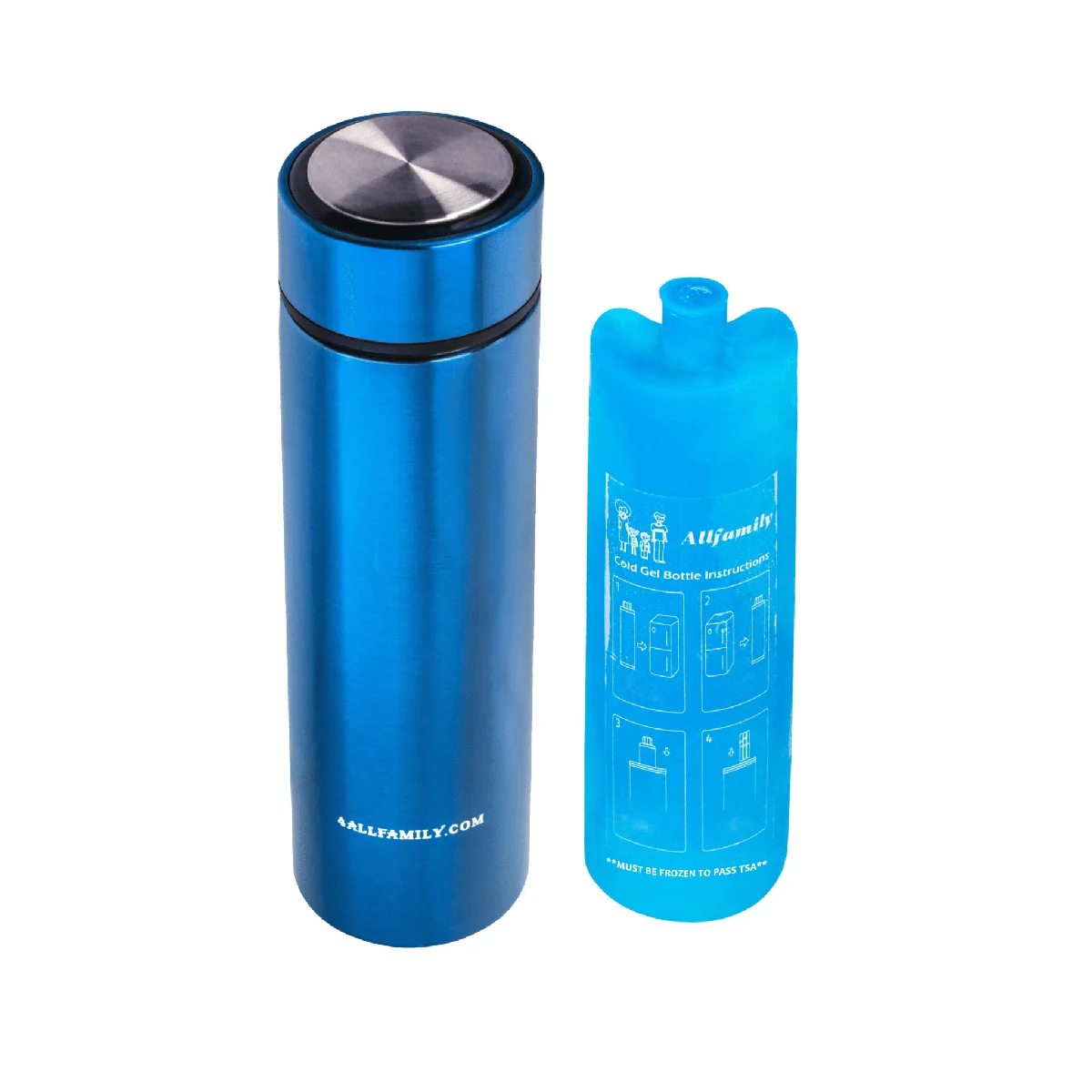
4AllFamily Nomad Medium
A smaller refrigerated supply without an outlet
- Cooling
- 35.6–46.4°F (2–8°C)
- Power / preparation
- Biogel pack
- Key condition
- Up to 30h at 86°F (30°C) ambient
Prepare the pack before travel
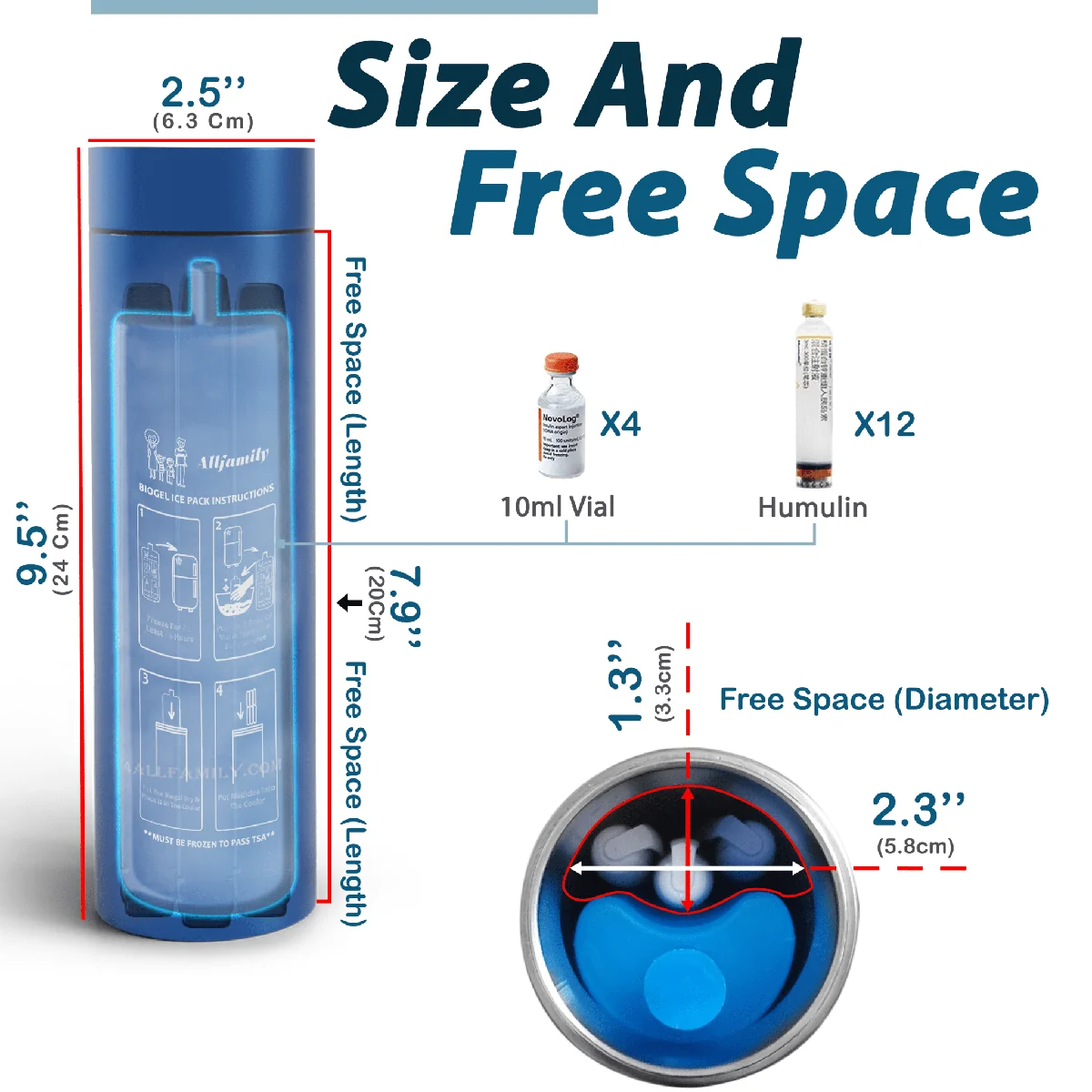
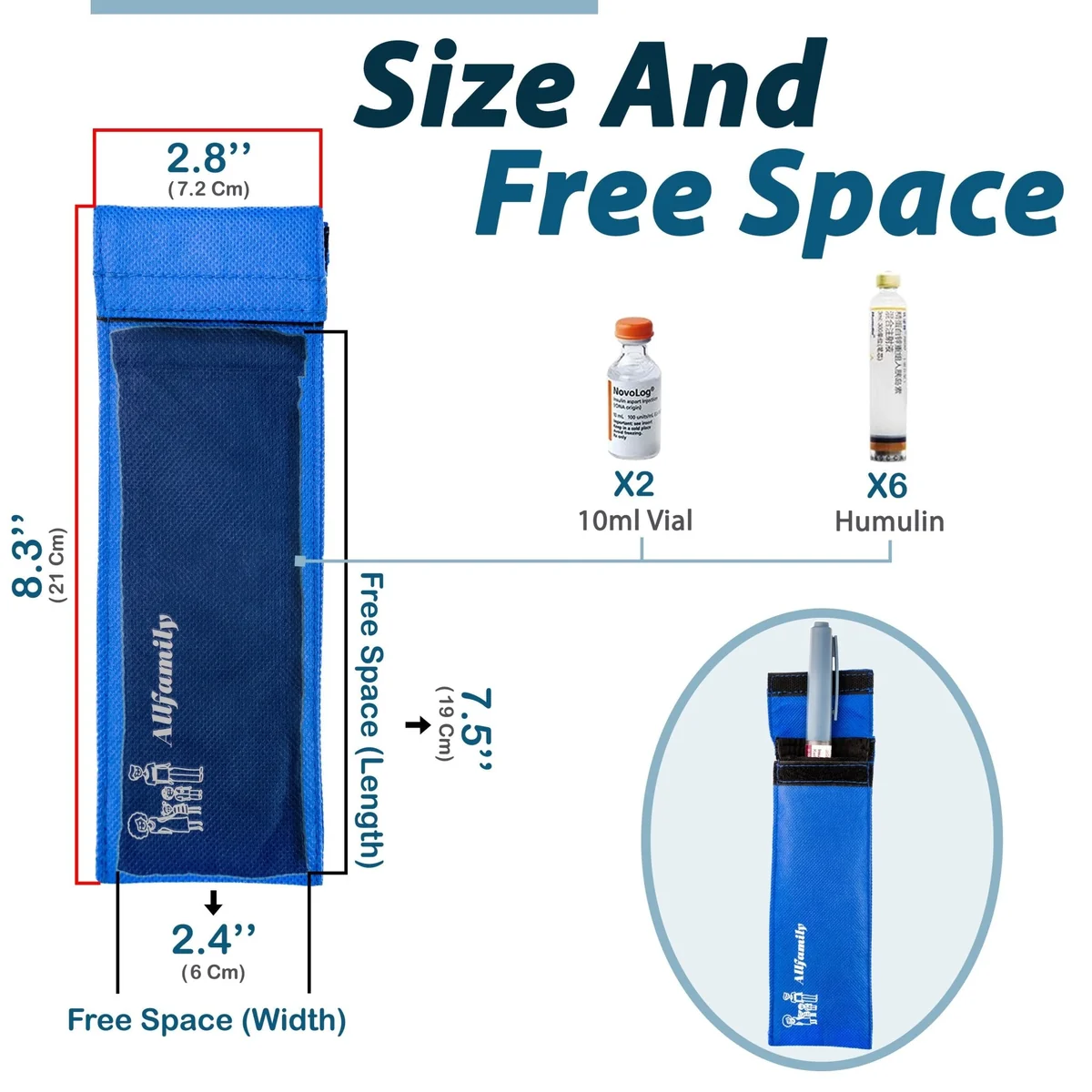
Usable length differs by source: the supplied older diagram says 7.87 in (20 cm); current product text says 6.85 in (17.4 cm). Ask 4AllFamily which applies before choosing a pen or carton size.
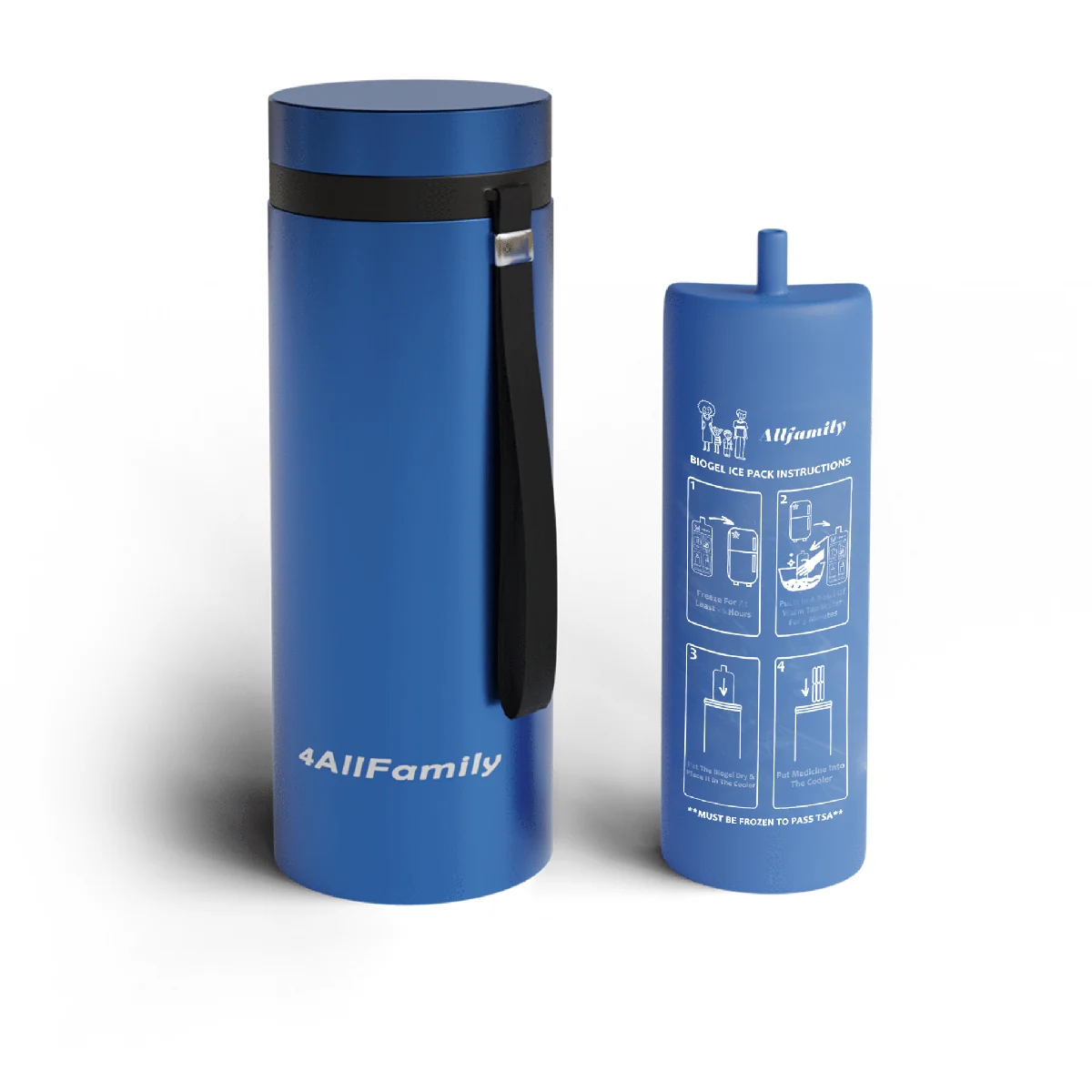
4AllFamily Nomad Big
More usable space in a power-free setup
- Cooling
- 35.6–46.4°F (2–8°C)
- Power / preparation
- Biogel pack
- Key condition
- Up to 33h at 86°F (30°C) ambient
Larger format than Medium
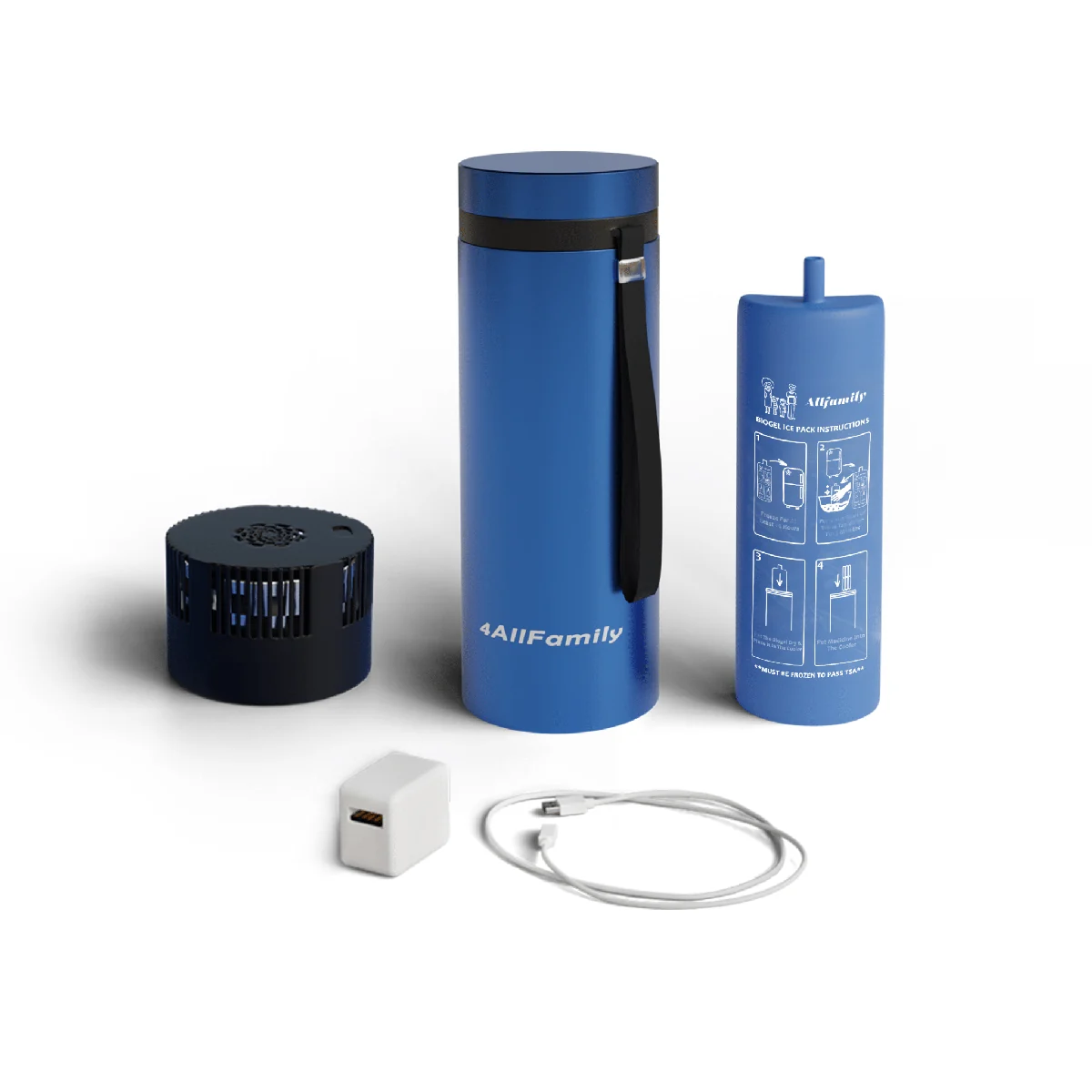
4AllFamily Explorer
A pack-based setup with optional USB assistance
- Cooling
- Mode dependent
- Power / preparation
- Biogel + optional USB
- Key condition
- USB alone provides heat protection
Refrigeration requires the Biogel pack
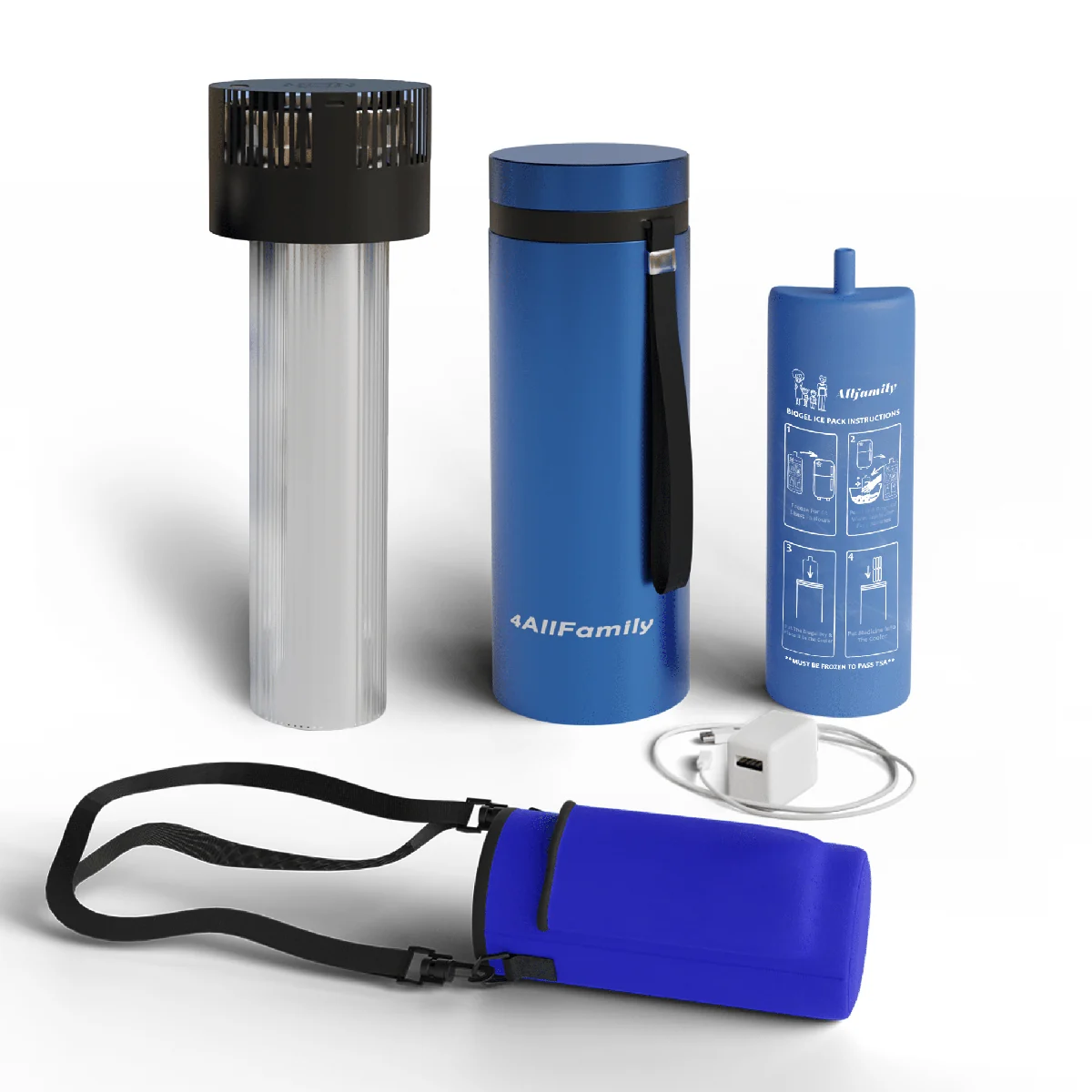
4AllFamily Voyager
Repeated refrigerated travel with reliable power
- Cooling
- 35.6–46.4°F (2–8°C)
- Power / preparation
- External USB; no built-in battery
- Key condition
- Continuous power; ambient ≤95°F (35°C)
Plan for every power interruption
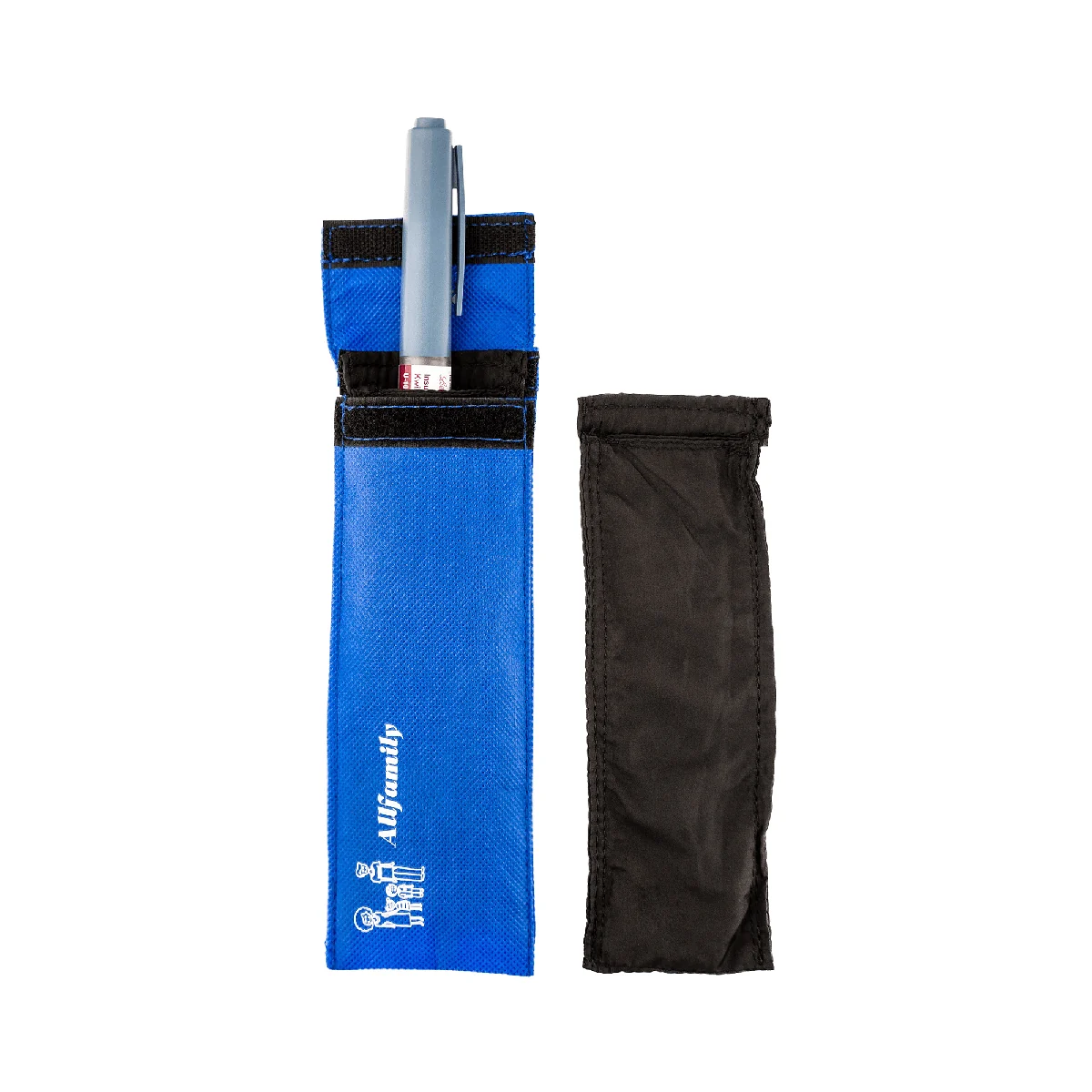
4AllFamily Chiller
A lightweight water-activated approach
- Cooling
- 64.4–78.8°F (18–26°C)
- Power / preparation
- Water activation
- Key condition
- At least 45h at 100.04°F (37.8°C) ambient
Not suitable for a 35.6–46.4°F (2–8°C) requirement
The pictured pouch size is unconfirmed. Choose from the manufacturer’s size guide; this is heat protection, not refrigeration.
Chiller · choose pouch size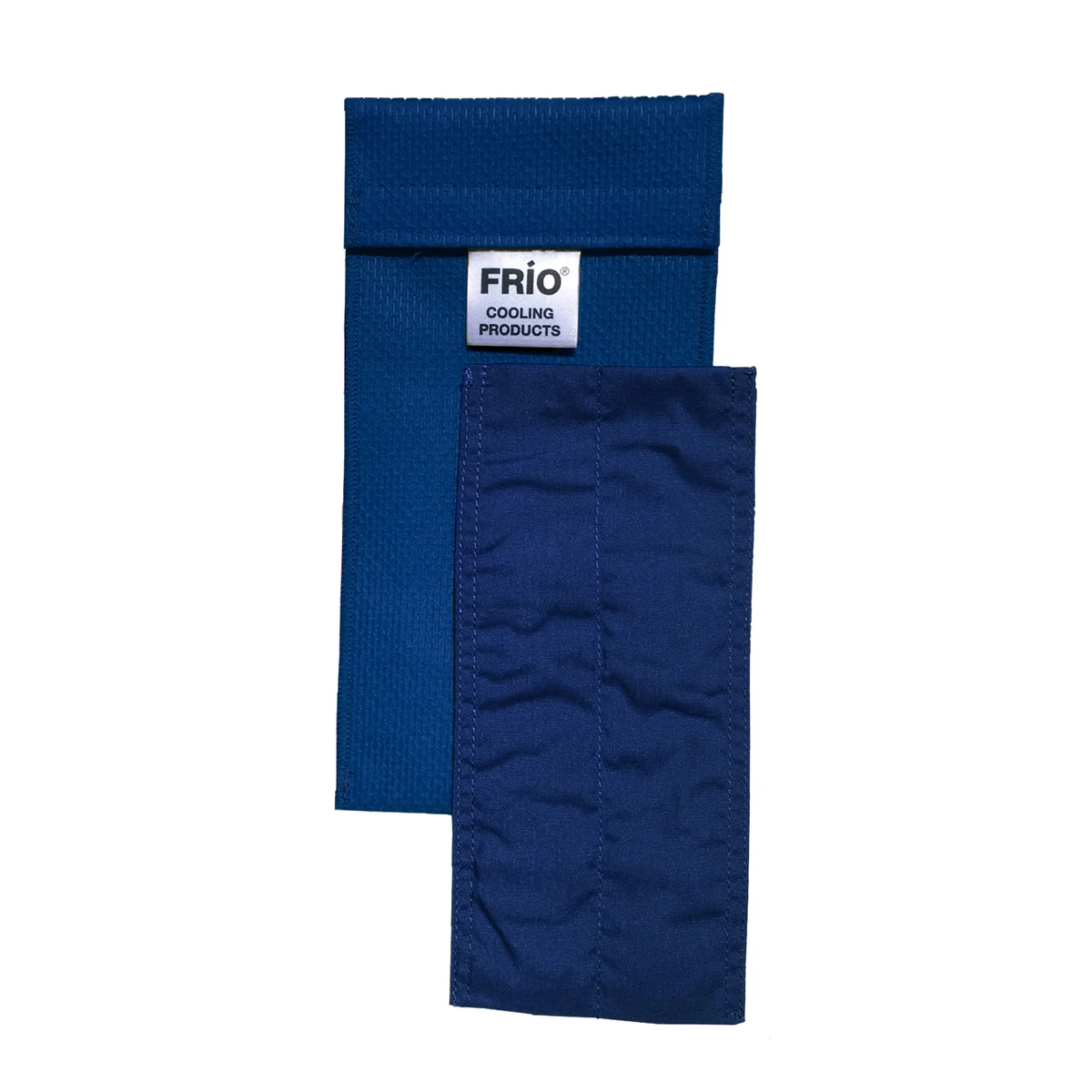
FRIO Duo
Water-activated cooling without a freezer
- Cooling
- 64.4–78.8°F (18–26°C)
- Power / preparation
- Water activation
- Key condition
- 45h at 100.04°F (37.8°C) ambient
Not suitable for a 35.6–46.4°F (2–8°C) requirement
FRIO official instructions
Check the usable space
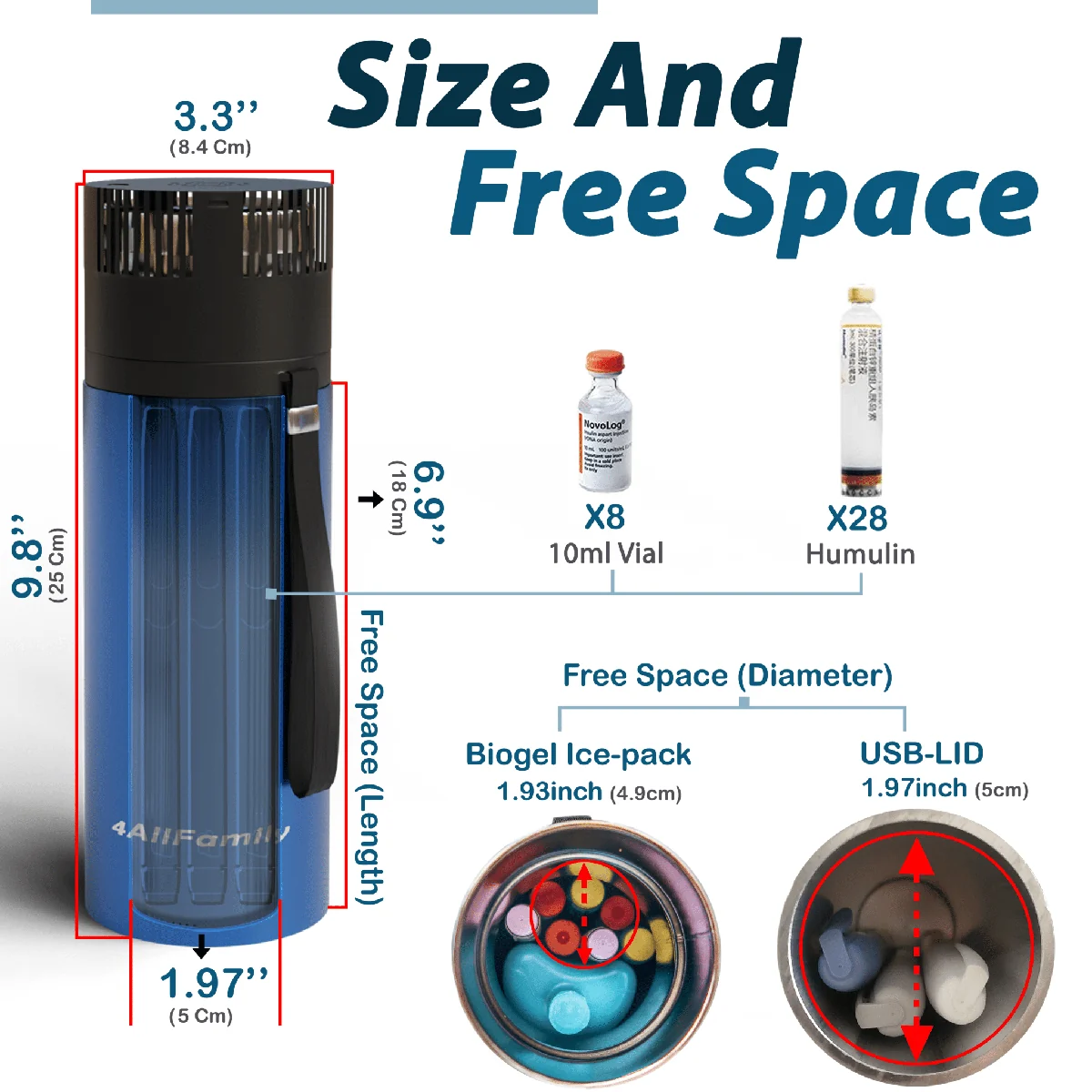
Compare the chamber with your medicine and any required original packaging. These manufacturer diagrams illustrate dimensions; pictured pens and vials do not establish compatibility.
Which type belongs on your shortlist?
| Your requirement | Type to investigate | Main question before buying |
|---|---|---|
| Refrigeration without a dependable outlet | Passive cooling case with a prepared cooling pack | Will documented refrigerated performance cover the whole journey? |
| Heat protection within the medicine’s permitted room-temperature conditions | Evaporative wallet or suitable insulated system | Does the stated range satisfy your exact medicine label? |
| Repeated refrigerated travel with reliable external power | Powered travel refrigerator with a fallback | What happens during a power interruption? |
| Only protection from knocks and disorganisation | Protective organiser | Do you also need a separate thermal system? |
These categories solve different problems. Insulation slows heat transfer. A refrigerator actively controls temperature within its operating conditions. A product described as a travel case might provide neither documented refrigeration nor a temperature history.
How we would choose between the designs
For a journey without reliable electricity, first examine a passive option such as Nomad. Its practical attraction is independence from an outlet. Its practical cost is preparation: you must have the right pack ready and know where the next cooling cycle will come from. That trade-off matters more than an attractive photograph of a compact bottle.
For a powered setup, distinguish Explorer’s operating modes from Voyager’s refrigeration function. Do not buy an electric lid on the assumption that every electric mode is a refrigerator. The detailed specifications in our portable insulin refrigerator guide explain that distinction.
For heat protection, compare Chiller and FRIO with your storage instructions before paying for active refrigeration. A water-activated design can simplify a trip where a freezer is unavailable, but it should not be chosen for a requirement it does not meet. Follow the wallet’s instructions for activation, drying and ventilation.
Five checks that make the comparison useful
- Write down the insulin brand, presentation and whether it is unopened or in use. Use the supplied leaflet or ask the pharmacist for the applicable storage conditions.
- Count time from packing at home to suitable storage at the destination, including waiting and transfers. Compare this with the relevant temperature claim, not just a headline hour count.
- Measure the usable compartment. Include caps, required packaging and the cooling pack. Keep needles and other supplies in their appropriate separate storage.
- Ask what you can replenish: electricity, a freezer or water. Choose a design that can be maintained throughout the trip, including the return journey.
- Check the delivered cost, variant, stock, returns and instructions. A cheaper case with the wrong operating limits is not a useful saving.
What would change our recommendation?
A one-pen day trip and several weeks of unopened supplies should not receive the same default recommendation. A narrow case may be convenient for the first scenario and unusable for the second. A larger refrigerator can be appropriate when its conditions are met, but introduces weight, space and power planning.
We would also change the shortlist if the seller cannot confirm the exact presentation, if required packaging does not fit, or if the journey extends beyond the documented conditions. The right response to a failed requirement is to choose another arrangement, rather than reinterpret a marketing claim.
Prepare the journey as carefully as the purchase
Keep instructions with the equipment and practise packing before departure. Check that you can close the case without pressure on the medicine and access what you need without repeatedly unpacking the rest. A temperature display can help you observe conditions, but a single reading does not reconstruct earlier exposure.
Use our insulin travel storage guide for the preparation sequence and long-flight guide for transfers and unreliable cabin power. If a medicine may have exceeded its storage conditions, obtain product-specific advice from its pharmacist or manufacturer before deciding whether to use it.
Frequently asked questions
Does the highest cooling-hour claim identify the best case?
No. Compare the temperature achieved, ambient conditions, cooling mode and preparation. Time below a heat threshold and time within a refrigerated range describe different performance.
Can one case suit every insulin pen?
No universal fit is established here. Check your actual presentation and required packaging rather than relying on a generic pen count.
Have these cases been independently tested by MediSearcher?
No. This comparison uses public manufacturer documentation and an editorial assessment of practical trade-offs. We do not claim hands-on testing.
Sources & selection method
We compare documented functions and practical trade-offs using the sources below. This is desk research, not hands-on testing. Manufacturer performance claims apply under their stated conditions. Product-research snapshot: 5 November 2026. Prices are item-only; shipping and taxes are additional.
Sources and product documentation
- 4AllFamily Nomad specifications — manufacturer
- 4AllFamily Explorer modes — manufacturer
- 4AllFamily Voyager specifications — manufacturer
- 4AllFamily Chiller pouches — manufacturer
- FRIO official instructions — manufacturer instructions
This guide provides general equipment information, not personalised medical advice. Follow the current instructions for your exact medicine and device. Ask your pharmacist, care team or manufacturer about uncertain compatibility or storage exposure.
Editorial reviewer: Dr Mattias Hagman
MediSearcher maintains editorial oversight of its accessories guides, including product suitability, manufacturer instructions and practical safety considerations. Commercial relationships are assessed separately from editorial recommendations.