
MEDISEARCHER NEWS
European Union · Naloxone and opioid overdose · 19 October 2026
In brief
- The European Medicines Agency’s human medicines committee has recommended changing the legal status of Nyxoid (naloxone) so that it can be made available without a medical prescription.
- Nyxoid is a single-dose naloxone nasal spray used as emergency treatment for known or suspected opioid overdose in adults and adolescents aged 14 years and older.
- Naloxone rapidly blocks the effects of opioids and can reverse potentially fatal respiratory depression during an overdose.
- Nyxoid has been authorised in the European Union since 2017, but EMA’s current public medicine information still lists it as prescription-only.
- The October 2026 CHMP recommendation therefore represents a proposed prescription-to-non-prescription switch, rather than the approval of a new medicine.
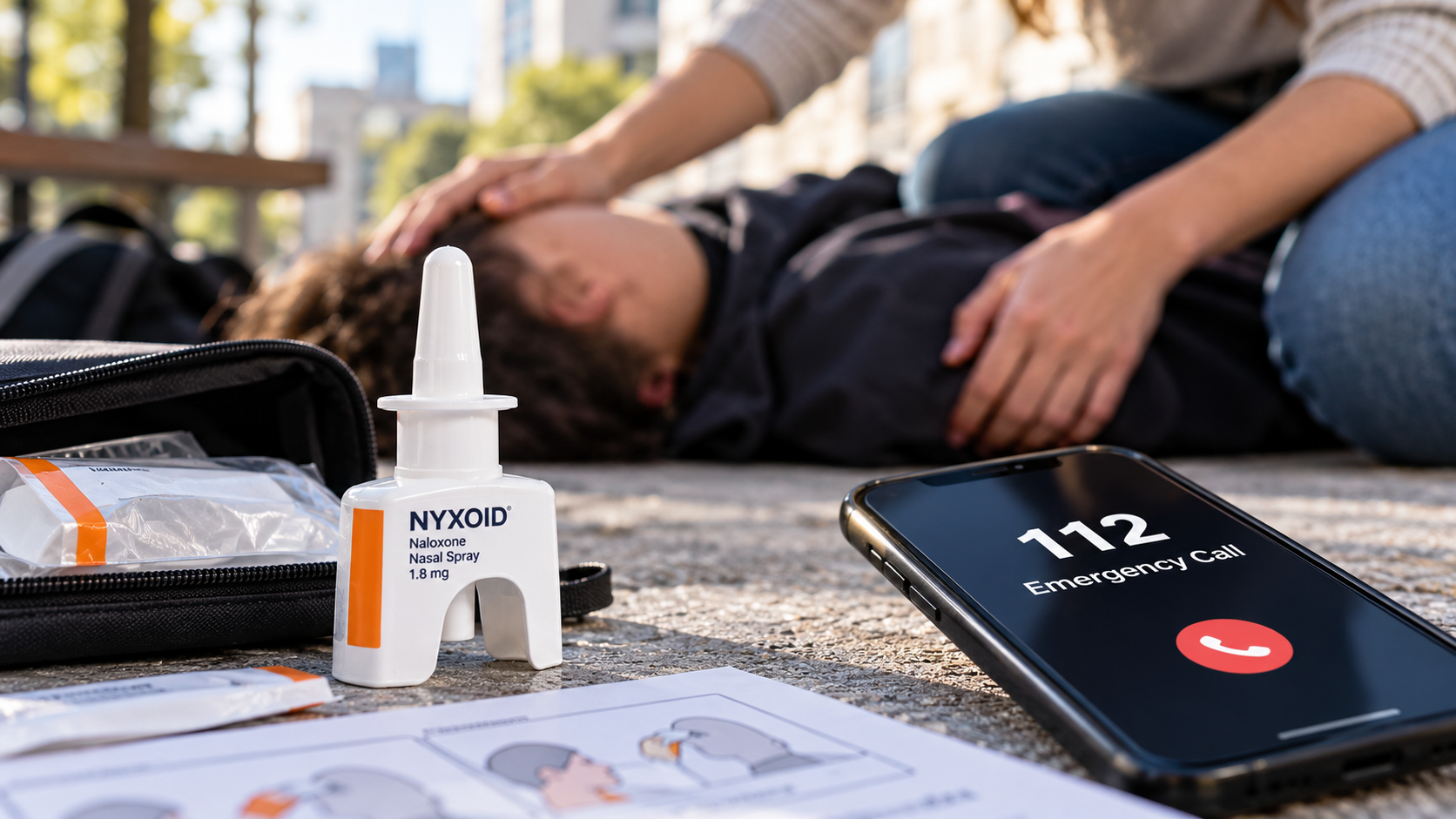
- Nyxoid does not replace emergency medical care. Emergency services should still be called when an opioid overdose is suspected.
Access to the opioid-overdose medicine naloxone could become significantly easier across Europe after the European Medicines Agency’s human medicines committee recommended making Nyxoid nasal spray available without a medical prescription.
The Committee for Medicinal Products for Human Use (CHMP) announced the recommendation following its 12–15 October 2026 meeting.
Nyxoid contains naloxone, a medicine that rapidly counteracts the effects of opioids and can restore breathing during an opioid overdose.
The medicine is administered as a nasal spray and was specifically developed so that it can be used by people without medical training while emergency medical help is on the way.
Nyxoid is already authorised throughout the European Union, but EMA’s current public product information states that it can only be obtained with a prescription.
The latest recommendation concerns changing that legal classification to make the medicine available without a medical prescription.
What is Nyxoid?
Nyxoid is a nasal spray containing naloxone, a medicine used for emergency treatment when an opioid overdose is known or suspected.
Opioids include medicines and drugs such as morphine, heroin and other substances that activate opioid receptors in the body.
During an overdose, opioids can suppress the central nervous system and slow breathing to dangerously low levels or stop breathing altogether.
Naloxone works by rapidly blocking opioid receptors and counteracting these effects.
Nyxoid is authorised for use in adults and adolescents aged 14 years and older.
It can be administered in both medical and non-medical settings.
What has the EMA recommended?
At its October 2026 meeting, the CHMP recommended changing Nyxoid’s legal status from a medicine requiring a medical prescription to a medicine that can be made available without a medical prescription.
This is different from the approval of a new medicine.
Nyxoid has held an EU-wide marketing authorisation since November 2017. The new regulatory procedure concerns how patients and members of the public can access the medicine.
The recommendation could therefore remove an important access barrier rather than introduce a new treatment.
EMA’s existing public information still describes Nyxoid as prescription-only, meaning consumers should not assume that the October recommendation has already made it available over the counter everywhere in Europe.
Can you currently buy Nyxoid without a prescription in the EU?
Not on the basis of the CHMP recommendation alone.
EMA’s current public product information continues to state that Nyxoid can only be obtained with a prescription.
The October 2026 CHMP decision is a recommendation to change that legal status.
Until the regulatory process is completed and the updated classification takes effect, patients should follow the rules currently applicable in their country.
National distribution and pharmacy arrangements can also influence how medicines are supplied in practice.
MediSearcher’s EU medicine access guide explains the broader European framework governing medicine authorisation and access across member states.
Why could prescription-free naloxone access matter?
Opioid overdose can rapidly become fatal because opioids can suppress breathing.
Naloxone can temporarily reverse these effects, creating an opportunity to restore breathing while emergency medical care is being arranged.
That makes rapid access particularly important.
A prescription requirement can create an additional step between someone deciding that they should carry naloxone and actually obtaining the medicine.
Allowing Nyxoid to be supplied without a medical prescription could potentially make it easier for people at risk of opioid overdose, as well as friends, family members and others who may witness an overdose, to obtain and carry naloxone.
The practical public-health effect will depend on how the new classification is implemented and how widely the product becomes available.
Does someone need medical training to use Nyxoid?
No.
One of the reasons EMA originally considered Nyxoid useful was that the nasal spray can be administered by people without medical training.
Unlike injectable emergency naloxone products, Nyxoid does not require the person responding to an overdose to use a needle.
EMA concluded when assessing the medicine that this could encourage members of the public to provide emergency treatment promptly.
Educational information and instructions for using the medicine remain important because naloxone is intended as emergency treatment in a potentially life-threatening situation.
How do you use Nyxoid during a suspected opioid overdose?
Nyxoid is supplied as a single-dose nasal spray containing 1.8 mg of naloxone.
When an opioid overdose is suspected, the recommended first dose is one spray into one nostril.
Emergency medical services should also be called.
If the first dose does not produce an adequate response, a second dose should be administered into the other nostril after approximately two to three minutes.
If the person initially responds but later deteriorates again, a second dose should be given immediately.
The spray should not be tested or primed before use because each device contains only one dose.
Does naloxone replace calling an ambulance?
No.
Nyxoid is not a substitute for emergency medical care.
EMA’s instructions state that emergency services should be called when an opioid overdose is suspected, with Nyxoid administered as soon as possible while medical help is awaited.
This is important because naloxone’s effect may wear off while the opioid responsible for the overdose remains active in the body.
A person who initially responds to naloxone can therefore deteriorate again and may require additional naloxone and further medical treatment.
What are the signs of an opioid overdose?
EMA’s patient information lists several warning signs that can indicate opioid overdose.
These include:
- very small or pinpoint pupils;
- slow, irregular or absent breathing;
- severe sleepiness;
- failure to respond to touch or loud sounds;
- snoring, gasping or gulping sounds; and
- blue or purple lips or fingernails caused by insufficient oxygen.
An opioid overdose is a medical emergency.
If an overdose is suspected, emergency medical assistance should be requested immediately.
Is naloxone dangerous if someone is dependent on opioids?
Naloxone can trigger acute opioid withdrawal in someone who is physically dependent on opioids because it rapidly blocks opioid receptors.
EMA lists symptoms including restlessness, agitation, nausea or vomiting, increased heart rate and sweating.
These effects need to be considered in the context of the immediate danger posed by opioid overdose, particularly potentially fatal respiratory depression.
Nausea is listed among the most common side effects associated with Nyxoid.
Why is Nyxoid a nasal spray rather than an injection?
Naloxone has been used in emergency medicine since the 1970s, traditionally including administration by injection.
Nyxoid was developed as an intranasal formulation that can be administered without using a needle.
As part of its original assessment, EMA reviewed evidence showing that naloxone delivered through the nose could produce appropriate levels of the medicine in the body.
The nasal route is particularly useful for emergency treatment outside healthcare settings because a friend, relative or other bystander can administer the medicine without needing to perform an injection.
Could family members carry Nyxoid for someone else?
The purpose of take-home naloxone is not limited to the person at risk of overdose administering the medicine to themselves.
During a serious opioid overdose, a person may be unconscious or otherwise incapable of treating themselves.
Nyxoid is therefore designed so that another person can administer it.
Improving access can potentially benefit family members, friends, carers and other people who may be present when an overdose occurs.
The exact way Nyxoid is supplied following any non-prescription switch may still depend on national pharmacy and healthcare arrangements.
Will Nyxoid automatically become available without prescription in every EU country?
The CHMP recommendation concerns the legal status of a medicine authorised through the European centralised regulatory system.
However, non-prescription status does not necessarily mean identical real-world access in every country.
EU member states maintain their own pharmacy systems, distribution arrangements, reimbursement policies and rules governing where different categories of medicine may be supplied.
Countries can also operate separate public-health programmes for take-home naloxone.
As a result, the practical route through which someone obtains Nyxoid may differ between countries such as Germany, France, Italy, Spain, the Netherlands, Ireland, Sweden, Poland and Malta.
MediSearcher will monitor national implementation as the regulatory change progresses.
Will pharmacies be able to sell Nyxoid directly?
The recommendation to remove the medical-prescription requirement could substantially simplify pharmacy access, but the precise retail and pharmacy arrangements should not be assumed before implementation details are confirmed.
Different European countries regulate non-prescription medicines in different ways.
Some medicines that do not require a doctor’s prescription may still be restricted to pharmacies or supplied with pharmacist involvement.
Patients should therefore check the current rules in their country once the regulatory change takes effect.
MediSearcher’s guide to checking online pharmacies in the EU explains how consumers can verify legitimate European online medicine sellers.
Could Nyxoid be bought online without a prescription?
A switch to non-prescription status would remove the medical-prescription requirement, but it would not make every website advertising naloxone a legitimate source.
Online pharmacy rules continue to apply to medicines sold over the internet.
Consumers should use regulated pharmacy channels and verify that an online pharmacy is legally authorised to supply medicines in the relevant country.
The permitted online sale of particular non-prescription medicines can also differ between EU member states.
A regulatory switch should therefore be understood as changing the medicine’s prescription status, not removing pharmacy regulation or medicine-supply safeguards.
Why did regulators support changing Nyxoid’s prescription status?
The prescription-status change has been undergoing regulatory assessment during 2026.
Earlier in the process, EMA’s Pharmacovigilance Risk Assessment Committee reviewed proposed changes to Nyxoid’s risk-management plan associated with the switch.
In April 2026, the committee considered the revised risk-management arrangements acceptable provided that an updated plan was submitted.
The committee also supported removing the previously identified additional risk-minimisation measures and considered routine pharmacovigilance sufficient to identify and characterise the medicine’s risks.
The CHMP has now completed the next major step by recommending that Nyxoid’s legal status be changed to non-prescription.
How established is the evidence for naloxone?
This is not an early-stage or experimental treatment.
Naloxone has been widely used in emergency medicine for decades.
EMA notes that naloxone has been used to treat opioid overdose since the 1970s and that its safety and effectiveness as an opioid antidote are well established.
Nyxoid itself has been authorised in the European Union since 2017.
The October 2026 development is therefore fundamentally an access and regulatory change, rather than new evidence showing that naloxone works.
What happens next for Nyxoid in Europe?
The October CHMP recommendation is an important step toward making Nyxoid available without a medical prescription.
The next significant milestone will be formal implementation of the change in the medicine’s regulatory status and updated European product information.
After that, attention will shift to how the change translates into practical access through pharmacies and other authorised supply routes in individual EU countries.
For patients and families, the most important distinction for now is that EMA’s current public information still lists Nyxoid as prescription-only.
The recommendation should therefore not yet be interpreted as confirmation that Nyxoid can already be purchased without a prescription in every European country.
MediSearcher will update this article when the non-prescription classification formally takes effect and as significant country-level pharmacy or access arrangements are announced.
Reviewed by: Dr Mattias Hagman, PhD
Editorial review: This article was reviewed for source accuracy, medicine-regulation context and consistency with MediSearcher’s editorial standards. Information about Nyxoid’s current prescription status, authorised use, naloxone dosing, emergency-use instructions and the October 2026 recommendation to change its legal status was checked against European Medicines Agency information. The distinction between the CHMP recommendation and currently implemented non-prescription access has been preserved throughout.
Last reviewed: 19 October 2026
Sources and verification
MediSearcher reviewed the following primary and authoritative sources when preparing this article:
- European Medicines Agency: CHMP meeting highlights, 12–15 October 2026, including the recommendation to change Nyxoid’s legal status to non-prescription
- European Medicines Agency: Nyxoid (naloxone) European Public Assessment Report, authorised use, dosing and current prescription status
- European Medicines Agency: Nyxoid product information and instructions for emergency administration
MediSearcher provides general information about medicines, medicine regulation and healthcare access. Nyxoid (naloxone) is an emergency treatment for known or suspected opioid overdose and is not a substitute for emergency medical care. As of 19 October 2026, EMA’s current public medicine information continues to describe Nyxoid as prescription-only, although the CHMP has recommended changing its legal status to make it available without a medical prescription. Access arrangements may differ between countries as the change is implemented. This article does not provide personal medical advice.