
MEDISEARCHER NEWS
United States · Thyroid eye disease · 18 October 2026
In brief
- The FDA has approved Enspryng (satralizumab-mwge) for adults with thyroid eye disease (TED).
- It is the first FDA-approved subcutaneous treatment for TED that can be administered at home by a patient or caregiver after appropriate training.
- During maintenance treatment, Enspryng is administered once every four weeks.
- The approval is supported by the Phase III SatraGO-1 and SatraGO-2 studies involving 258 patients across 19 countries.
- SatraGO-2 showed significant improvements in eye bulging and double vision, although SatraGO-1 did not meet its prespecified primary efficacy endpoint at week 24.
- The approval creates an alternative to treatment models that can require patients with TED to travel to healthcare facilities for intravenous therapy.
The US Food and Drug Administration has approved the first at-home subcutaneous treatment option for adults with thyroid eye disease, potentially changing how some patients with the autoimmune condition receive long-term treatment.
Enspryng (satralizumab-mwge) was approved for adults with thyroid eye disease, also known as TED or Graves’ ophthalmopathy, on 15 October 2026.
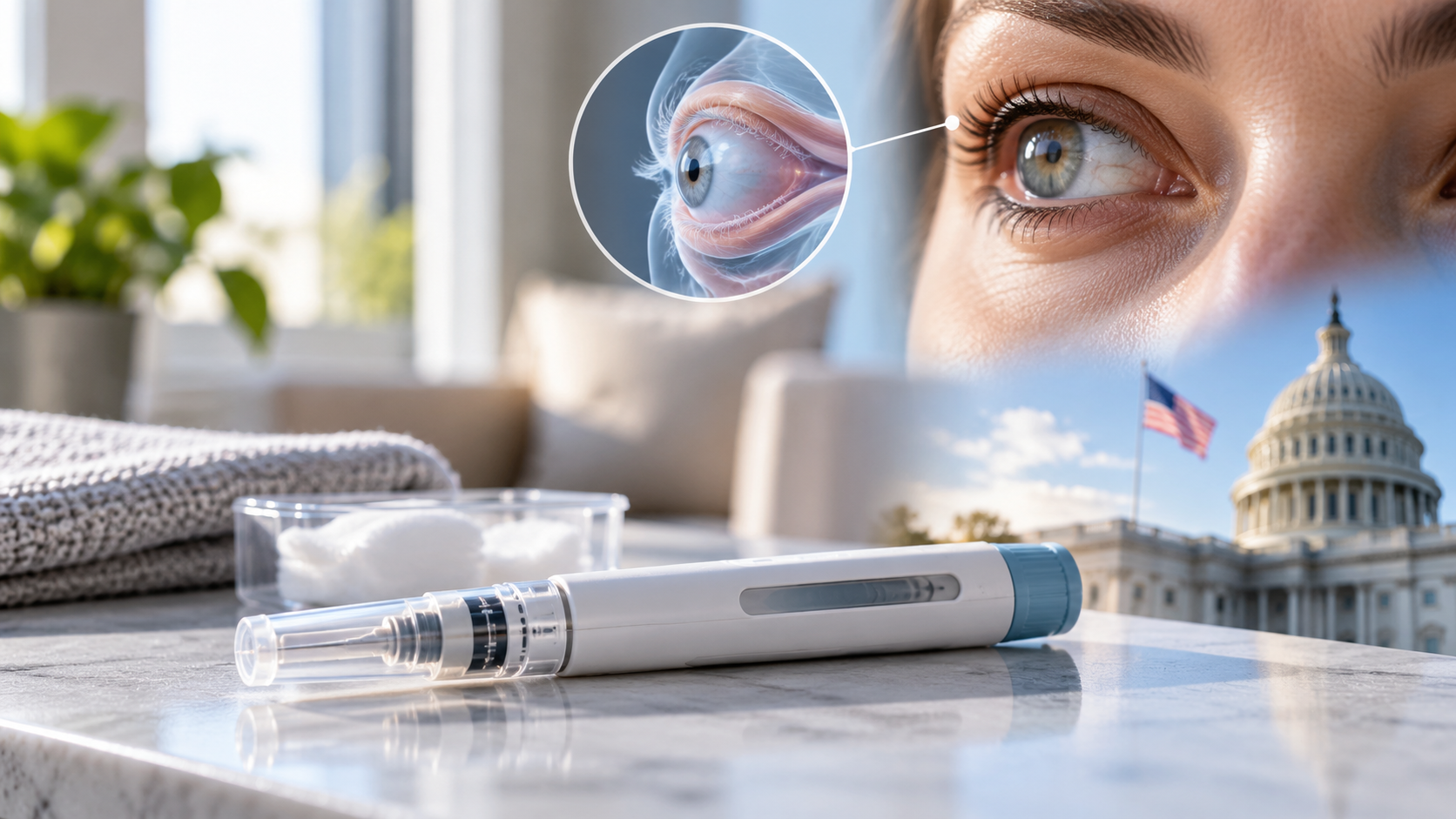
Unlike an intravenous infusion administered at a healthcare facility, Enspryng is given by subcutaneous injection. After appropriate training from a healthcare professional, the medicine can be administered at home by the patient or a caregiver.
During the maintenance phase, Enspryng is administered once every four weeks.
The approval is particularly relevant to patients because thyroid eye disease can affect vision and make travelling for treatment difficult, while existing targeted treatment options have been limited.
What is Enspryng?
Enspryng is the brand name for satralizumab-mwge, a monoclonal antibody that targets the interleukin-6 receptor, or IL-6R.
IL-6 is involved in inflammatory and immune processes. By blocking IL-6 receptor signalling, satralizumab is designed to interfere with inflammatory pathways involved in thyroid eye disease.
Enspryng is not a completely new medicine.
The FDA originally approved it in 2020 for the treatment of neuromyelitis optica spectrum disorder in adults who are positive for anti-aquaporin-4 antibodies.
The October 2026 decision expands its approved use to include adults with thyroid eye disease.
What is thyroid eye disease?
Thyroid eye disease is a rare autoimmune condition in which inflammation affects tissues around the eyes.
It is strongly associated with Graves’ disease, an autoimmune thyroid disorder, although thyroid eye disease and thyroid dysfunction are distinct conditions.
Symptoms can include:
- eye bulging, known medically as proptosis;
- double vision, or diplopia;
- eye pain or discomfort;
- redness and swelling;
- difficulty closing the eyelids completely;
- changes in eye movement or alignment; and
- in severe cases, complications that can threaten vision.
The condition can also substantially affect appearance and everyday activities.
Genentech estimates that thyroid eye disease affects approximately 155 people per 100,000 in the United States.
Why is the Enspryng approval important?
The practical difference is the way treatment can be administered.
Enspryng is the first FDA-approved subcutaneous at-home treatment option specifically for thyroid eye disease.
Following training from a healthcare professional, a patient or caregiver can administer the medicine rather than requiring every dose to be delivered through an intravenous infusion at an infusion centre or other healthcare facility.
That could be particularly relevant for people who live far from specialist treatment centres or have difficulty travelling because of visual symptoms.
At-home administration does not mean treatment takes place without medical supervision. Enspryng remains a prescription medicine, and patients require appropriate clinical assessment, monitoring and training.
How often is Enspryng taken for thyroid eye disease?
Enspryng is administered by subcutaneous injection, meaning the medicine is injected beneath the skin.
Treatment begins with loading doses before moving to maintenance treatment.
During maintenance, Enspryng is administered once every four weeks.
Patients or caregivers may administer the medicine after receiving appropriate training from a healthcare provider.
Patients should follow the FDA-approved prescribing instructions and the dosing schedule provided by their healthcare professional rather than changing or delaying doses themselves.
How effective is Enspryng for thyroid eye disease?
The FDA approval is supported by the global Phase III SatraGO-1 and SatraGO-2 clinical trials.
The two randomized, placebo-controlled studies enrolled a combined 258 patients from 19 countries with active moderate-to-severe or chronic thyroid eye disease.
The studies evaluated whether Enspryng could improve important manifestations of the disease, including proptosis — the characteristic forward bulging of the eye — and diplopia, or double vision.
The results require some nuance because the two Phase III studies did not produce identical outcomes.
What did SatraGO-2 show?
SatraGO-2 produced the clearest positive efficacy result.
Among participants with active thyroid eye disease, 52.9% of patients receiving Enspryng achieved a proptosis response, compared with 23.4% receiving placebo.
A proptosis response was defined around a clinically meaningful reduction in eye bulging.
Improvement in double vision was also more common with Enspryng.
Among relevant patients in the active disease population, 60.7% receiving Enspryng experienced a reduction in diplopia compared with 25.8% receiving placebo.
Results were also reported as consistent in the broader SatraGO-2 population, which included people with both active and chronic thyroid eye disease.
Did both Enspryng Phase III trials succeed?
No, and this is an important part of interpreting the evidence.
SatraGO-1 did not meet its prespecified primary efficacy endpoint at week 24.
The two SatraGO studies were similarly designed, making the difference between their primary results particularly relevant when assessing the overall clinical programme.
The FDA nevertheless approved Enspryng based on the totality of evidence from the programme, including the positive findings from SatraGO-2 and other efficacy and safety data.
This means it would be misleading to describe the programme simply as two successful Phase III trials. The evidence supporting approval includes a strongly positive SatraGO-2 study alongside a SatraGO-1 study that missed its prespecified primary endpoint.
Is Enspryng effective for chronic thyroid eye disease?
The SatraGO programme included people with both active and chronic thyroid eye disease.
Genentech reported that SatraGO-2 produced consistent results in the overall study population, including participants with chronic disease.
This is potentially important because thyroid eye disease changes over time.
The early active phase is characterised by inflammation, while some patients later enter a more stable chronic phase but continue to experience problems such as persistent eye bulging, double vision or changes to tissues around the eye.
The appropriate treatment therefore depends partly on the stage and severity of the disease and the individual patient’s clinical circumstances.
What are the safety risks of Enspryng?
No new safety signals were identified in the SatraGO thyroid eye disease studies compared with the medicine’s previously established safety profile.
However, Enspryng affects the immune system and is not a risk-free treatment.
The FDA-approved prescribing information should be used for the complete current list of warnings, precautions, contraindications and adverse reactions.
Because medicines that alter immune signalling can affect infection risk and other aspects of health, patients should discuss their medical history, current medicines and vaccination status with their healthcare provider before treatment.
Patients receiving Enspryng also require appropriate monitoring during treatment.
Can patients really take Enspryng at home?
Yes, but at-home treatment does not mean unsupervised treatment.
Enspryng can be administered by a patient or caregiver after appropriate training from a healthcare professional.
This removes the need for the medicine itself to be administered as an intravenous infusion at a healthcare facility, but patients still require a prescription and ongoing medical management.
The distinction is important because the convenience of home administration is one of the main ways this approval changes the treatment landscape for thyroid eye disease.
How does Enspryng compare with Tepezza?
Enspryng enters a US thyroid eye disease treatment market that already includes Tepezza (teprotumumab-trbw), a targeted biologic treatment approved by the FDA for thyroid eye disease.
The medicines work differently and are administered differently.
Tepezza targets the insulin-like growth factor-1 receptor and is administered by intravenous infusion.
Enspryng targets the IL-6 receptor and is administered by subcutaneous injection, with at-home administration possible after appropriate training.
That does not mean Enspryng is automatically the better treatment.
Differences in mechanism, clinical evidence, safety profile, disease characteristics, dosing, insurance coverage and individual medical circumstances can all affect which treatment is appropriate.
Results from separate clinical trials should also not be treated as direct head-to-head comparisons unless the medicines have actually been evaluated against each other in an appropriately designed study.
When will Enspryng be available for thyroid eye disease?
Unlike a regulatory application that is still awaiting a decision, Enspryng has now received FDA approval for adults with thyroid eye disease.
The next practical questions for patients concern prescribing, distribution and insurance coverage.
Because Enspryng was already an approved medicine in the United States for another condition, there is an existing commercial and distribution framework for the product. The new FDA decision expands the approved indication to include thyroid eye disease.
Actual access for an individual patient can nevertheless depend on their healthcare provider, pharmacy or specialty-pharmacy arrangements and health insurance coverage.
Will insurance cover Enspryng for thyroid eye disease?
FDA approval does not automatically guarantee that every US health plan will immediately cover Enspryng for every eligible patient with thyroid eye disease.
Commercial insurers, Medicare plans and other payers can apply their own coverage criteria.
Depending on the plan, patients may encounter requirements such as:
- prior authorization;
- confirmation of the thyroid eye disease diagnosis;
- documentation of disease severity or symptoms;
- specialist prescribing requirements;
- use of a designated specialty pharmacy; or
- other plan-specific medical-necessity criteria.
Coverage policies may also change as insurers update their formularies and treatment criteria following the new FDA indication.
Patients considering treatment should therefore verify current coverage directly with their health plan and prescribing healthcare provider rather than assuming FDA approval means the medicine will automatically be covered.
Can Enspryng be ordered from an ordinary online pharmacy?
Enspryng is a prescription biologic medicine rather than an ordinary consumer product.
Patients should not interpret at-home administration as meaning that the medicine can simply be purchased from any website advertising prescription treatments.
Legitimate access requires a prescription and appropriate clinical management.
Depending on insurance and distribution arrangements, treatment may also involve a specialty pharmacy rather than a conventional retail pharmacy.
Patients should be cautious about websites claiming to sell prescription biologic medicines without a valid prescription or appropriate medical assessment.
What does the FDA approval mean for patients with thyroid eye disease?
The approval gives US patients another targeted treatment option for a condition that can substantially affect vision, appearance and quality of life.
Its most distinctive practical feature is the ability to administer treatment subcutaneously at home following appropriate training.
For some patients, that could reduce the travel and scheduling burden associated with receiving treatment at an infusion centre.
The evidence should nevertheless be interpreted carefully. SatraGO-2 produced significant improvements in eye bulging and double vision, while SatraGO-1 did not meet its prespecified primary endpoint.
Enspryng also remains a prescription biologic requiring medical supervision, and real-world access will depend partly on insurance coverage and distribution arrangements.
MediSearcher will update this article as significant new information emerges on US availability, insurance coverage, prescribing access or longer-term evidence for Enspryng in thyroid eye disease.
Reviewed by: Dr Mattias Hagman, PhD
Editorial review: This article was reviewed for source accuracy, medicine-regulation context and consistency with MediSearcher’s editorial standards. Information about Enspryng’s FDA approval, administration, mechanism and Phase III evidence was checked against official regulatory records, the SatraGO clinical-trial records and published clinical-program information. The differing primary outcomes of SatraGO-1 and SatraGO-2 have been explicitly preserved rather than presenting the Phase III programme as uniformly positive.
Last reviewed: 18 October 2026
Sources and verification
MediSearcher reviewed the following primary and authoritative sources when preparing this article:
- Genentech: FDA approval of Enspryng (satralizumab-mwge) for adults with thyroid eye disease, published 15 October 2026
- US Food and Drug Administration: Purple Book record for Enspryng (satralizumab-mwge), BLA 761149
- ClinicalTrials.gov: Phase III SatraGO-2 study of satralizumab in thyroid eye disease, NCT06106828
- ClinicalTrials.gov: Phase III SatraGO-1 study of satralizumab in thyroid eye disease, NCT05987423
MediSearcher provides general information about medicines, medicine regulation and healthcare access. Enspryng (satralizumab-mwge) is an FDA-approved prescription medicine for adults with thyroid eye disease and requires appropriate medical assessment and supervision. At-home administration should take place only after appropriate training and according to the prescribed treatment plan. Insurance coverage and access may vary between patients and health plans. This article does not provide personal medical advice.